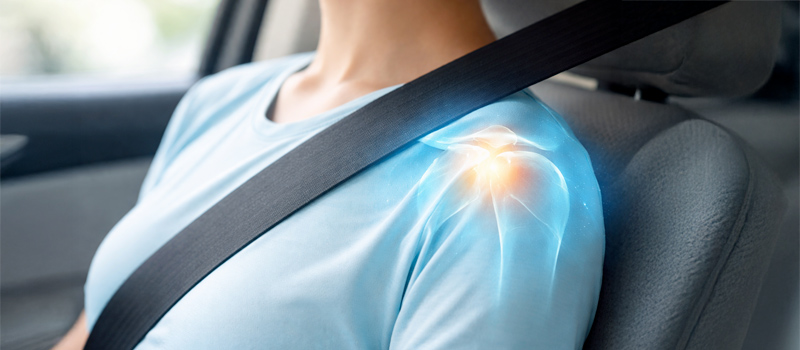
Shoulder pain following a car accident may surprise you—even if the crash seemed minor. The strain from a seatbelt can lead to lasting discomfort and potential damage to joints and nerves. With expert chiropractic care, many patients find long-term relief and recovery after such injuries.
Common Causes of Shoulder Pain After Car Accidents
You felt the jolt, your shoulder got tugged hard, and now it won’t stop aching. Many people never realize how much a simple seatbelt injury can impact their musculoskeletal health… until the pain settles in and stays. Let me walk you through why this happens and how chiropractic care, especially when led by a spine-focused expert, can give you real, lasting relief.
Why Seatbelts Can Cause Shoulder Pain
As a chiropractor with over two decades of experience treating auto injuries, I can confidently tell you that while seatbelts save lives, they also introduce a unique set of physical stressors to the upper body. In even minor accidents, the force absorbed by the seatbelt can:
- Compress the shoulder joint: Especially around the collarbone and
shoulder.
- Strain ligaments: Leading to inflammation and instability.
- Irritate nerves: Causing radiating symptoms like tingling or numbness.
In many cases, this results in shoulder dysfunction that doesn’t fully manifest until days or even weeks later. Over time, patients may experience:
- Chronic tightness in the shoulder and upper back.
- Reduced range of motion.
- Radiating numbness or tingling into the arm or hand.
Understanding the Mechanics of Injury
Seatbelt-related shoulder pain often correlates with misalignments in the cervical and thoracic spine. These misalignments force surrounding muscles to compensate, contributing to:
- Inflammation and restricted circulation.
- Muscle guarding that limits movement.
- Extra stress on rotator cuff and scapular stabilizers.
I analyze every case using orthopedic testing, posture analysis, and digital x-rays. These identify biomechanical distortions and underlying spine alignment issues that often complicate shoulder injury healing.
Chiropractic Evaluation and Treatment Approach
At Cafe’ of Life Longmont, I work with each patient to identify joint misalignments, soft tissue damage, and neurological symptoms linked to seatbelt trauma. Depending on findings, care may include:
- Manual chiropractic adjustments: Realign spinal segments and enhance nerve function—especially helpful if the neck or upper back is involved.
- Instrument-adjusting techniques: A gentler approach suitable for children, elderly patients, and pregnant women—performed using handheld tools for precision.
- Laser Therapy: Enhances circulation, reduces inflammation, and speeds tissue repair.
- Spinal traction: Decompresses the cervical spine, helping with disc rehydration and nerve relief.
These interventions aim to restore movement, reduce pain, and prevent injury progression.
Seatbelt Injuries and Thoracic Outlet Syndrome
One commonly overlooked outcome of seatbelt impact is Thoracic Outlet Syndrome (TOS). This occurs when nerves or vessels are compressed between the collarbone and first rib—right where the seatbelt crosses. Symptoms may include:
- Aching shoulder pain.
- Numbness or weakness in the arm and hand.
Correcting spinal misalignments and restoring biomechanics near the cervicothoracic junction can relieve these symptoms effectively.
When to Seek Chiropractic Care
If you’ve been in a car accident—even minor—and feel any shoulder discomfort, seek care early before symptoms worsen. At Cafe of Life, we focus on conservative yet effective treatment so you can recover fully—not settle for partial relief.
Expecting mothers and parents should also pay attention: children and pregnant individuals may absorb seatbelt force differently. I offer specialized care for:
- Pregnant women: Certified prenatal chiropractor for safe modifications.
- Children: Pediatric expertise for the developing musculoskeletal system.
Preventing Recurring Shoulder Pain
Long-term recovery involves more than just adjustments. I coach each patient on:
- Ergonomic practices at work or home.
- Posture correction to support healing alignment.
- Home therapies like stretching and strengthening routines.
Our licensed massage therapists at Professional Massage Therapy Services In Longmont complement care by reducing tension, adhesions, and improving circulation to affected muscles.
Whether your pain is new or months old, healing is possible with a skilled and individualized chiropractic plan backed by experience and trusted by the local medical community.
Common Questions Related to Car Accident Shoulder Pain
How does a seatbelt cause shoulder pain?
Seatbelts restrain the body during collisions, but they concentrate kinetic force over the clavicle and shoulder. This can compress soft tissues, misalign shoulder joints, and irritate cervical nerves—leading to pain, inflammation, and restricted motion in the shoulder and upper back.
Can chiropractic care help with pain that appears weeks after an accident?
Absolutely. Delayed onset shoulder pain is common after auto accidents, especially when the original injury caused micro-tears or misalignments that worsen over time. Chiropractic care addresses the source of the dysfunction, even if symptoms didn’t surface right away.
Are there alternatives to manual adjustments?
Yes. At Cafe of Life Longmont, I use gentle instrument-based adjustments when appropriate. These are ideal for individuals sensitive to the audible “pop” of traditional chiropractic or for those requiring more delicate care, such as children and pregnant women.
What diagnostic tools do you use to evaluate shoulder pain?
In my practice, I rely on thorough orthopedic evaluation and digital x-rays to assess spinal alignment and structural integrity. This allows me to identify issues like nerve impingement or bone misalignment that are frequently associated with seatbelt-related injuries.
What other therapies support recovery from shoulder injuries?
In addition to chiropractic adjustments, I often use Laser Therapy and spinal traction to reduce inflammation, decompress pinched nerves, and promote tissue healing. Custom home stretches and posture coaching also support long-term results.
Is this type of injury common in pregnant women or children?
Yes, although it presents differently. In pregnant women, seatbelt pressure may exacerbate existing spinal stress from pregnancy. In children, immature musculoskeletal structures may be more vulnerable to subtle trauma, which can show up as uneven posture, headaches, or shoulder complaints. I provide Prenatal Chiropractic Care and Chiropractic Care for Children to specifically address these needs.